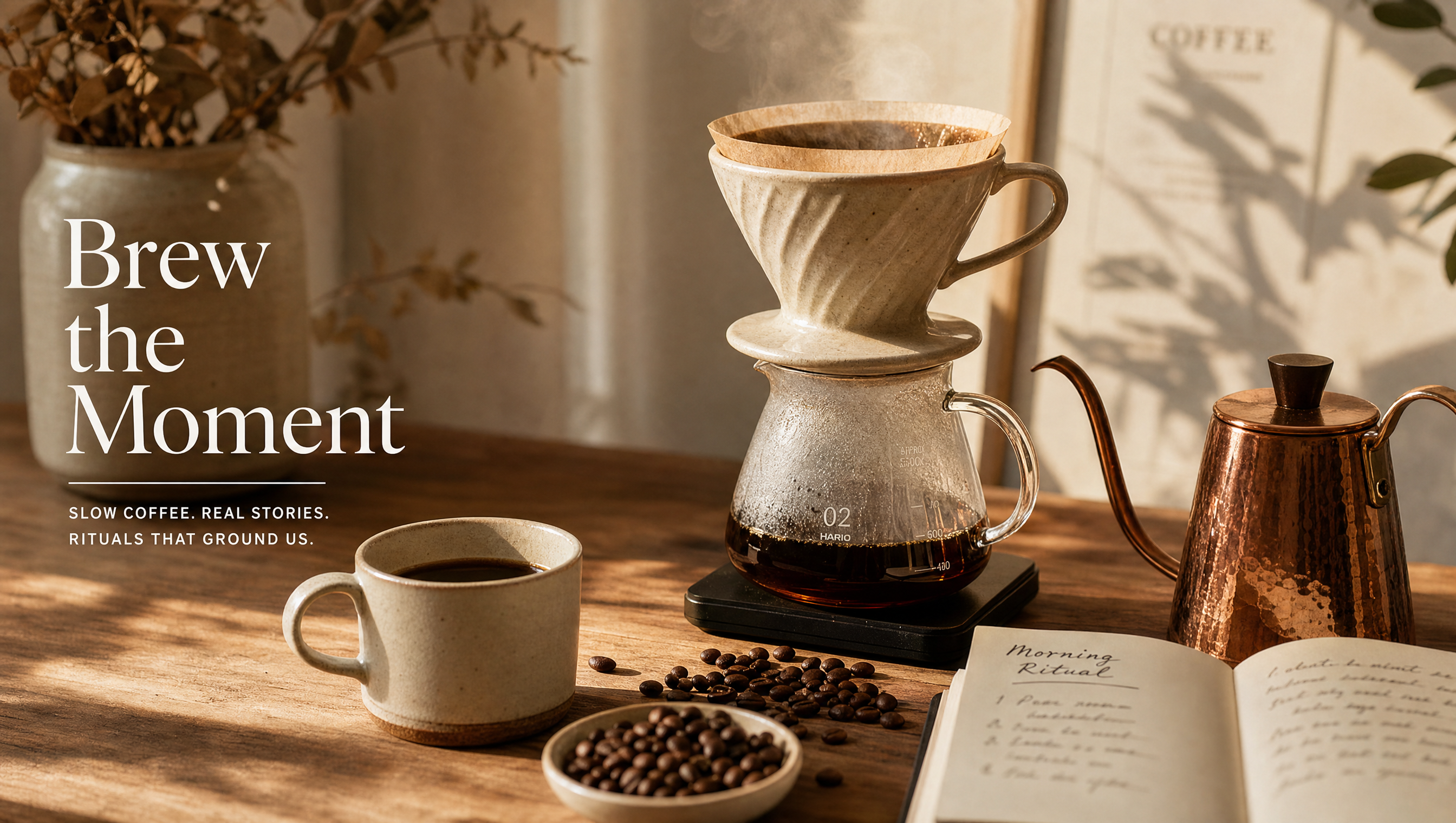
You make the same coffee, the same way, every morning. Same beans, same grinder, same V60, same ratio. And yet somehow, today's cup tastes different from yesterday's. Brighter, maybe. Or flatter. Or more bitter. You did not change anything, so why did the coffee change?
If this has happened to you, you are not alone. It is the single most common frustration among pour-over brewers, and it has a simple explanation: the V60 is a high-sensitivity brewer. It responds to tiny variables that other methods absorb. This is both its greatest strength (it lets the coffee's character shine) and its greatest challenge (it punishes inconsistency). The good news is that once you understand the variables, you can control them.
Variable #1: Grind Consistency
Your grind size is the most obvious variable, but consistency is the hidden one. Even if you use the same setting, your grinder may produce slightly different particle distributions depending on bean density, humidity, and how recently you cleaned the burrs. A difference of 50 microns in average particle size can shift the cup from balanced to sour.
What to do: clean your grinder regularly, purge a few grams of beans through it before grinding your brew, and pay attention to the taste. If the cup is sour, grind slightly finer. If bitter, slightly coarser. Small adjustments, one at a time.
Variable #2: Pour Speed and Pattern
How fast you pour and where you aim the water stream changes extraction dramatically. A fast pour creates more agitation, which extracts more. A slow center pour extracts less. A spiral pattern that hits the edges can channel water along the filter, bypassing the coffee entirely.
What to do: practice a consistent pour. Use a gooseneck kettle (it exists for this reason). Aim for a steady, controlled spiral from center outward, keeping the water level consistent. Time your pours: a standard V60 recipe might call for three pours of 60g each, spaced 45 seconds apart.
Variable #3: Water Temperature Drift
If you are not using a variable-temperature kettle, your water temperature drops throughout the brew. The first pour might be at 96 degrees C, but by the third pour, the water in your kettle has cooled to 90 degrees. That 6-degree shift changes extraction significantly. See our guide to what water temperature does for the full breakdown.
What to do: use a variable-temperature kettle, or refill your kettle with fresh hot water between pours. At minimum, be aware that your later pours are cooler than your first.
Variable #4: Coffee Freshness
Coffee changes as it ages. A bag of beans roasted three days ago behaves differently from the same bag two weeks later. Fresh coffee releases more CO2 during brewing, which affects how the water interacts with the grounds. The bloom is larger, the bed rises more, and extraction can be uneven. As the coffee ages and degasses, the cup becomes more consistent but also less vibrant.
What to do: let beans rest 5-10 days after roasting before brewing pour-over. And once opened, use them within 3-4 weeks. See our storage guide for keeping beans fresh longer.
The Bloom Matters
The initial pour (the bloom) is your diagnostic tool. If the coffee bubbles aggressively and rises significantly, it is very fresh. If it barely bubbles, it is stale. Adjust your expectations accordingly: very fresh coffee may need a slightly coarser grind or lower temperature to tame the extra CO2.
Variable #5: Filter Preparation
How you prepare your filter affects the cup. Rinsing the filter with hot water before brewing removes paper taste and preheats the dripper. But if you do not empty the rinse water from the carafe, it dilutes your coffee. And if you do not rinse at all, the paper taste comes through as a flat, papery note.
What to do: always rinse the filter with hot water, then discard the rinse water from your server before adding coffee. Be consistent about it.
Variable #6: Ambient Conditions
This is the one nobody talks about. Humidity, ambient temperature, and even altitude affect your brew. On a humid day, coffee grounds absorb moisture from the air, changing the extraction. At altitude, water boils cooler, so your "just off boil" is already lower. If you travel with your coffee kit (see our travel guide), you will notice your recipe needs adjustment in different locations.
What to do: accept that some variation is environmental and beyond your control. Focus on the variables you can control.
The Pursuit of Consistency
Here is the truth: perfect consistency in pour-over is nearly impossible. The method is inherently sensitive, and that sensitivity is what makes it rewarding. The goal is not to eliminate variation but to narrow it. Here is a checklist for your best shot at a consistent cup:
- Use the same coffee-to-water ratio every time (weigh both)
- Use the same grind setting (and clean your grinder regularly)
- Use the same water temperature (variable-temp kettle or consistent wait time)
- Use the same pour structure (same number of pours, same timing, same pattern)
- Rinse the filter and discard the rinse water
- Let beans rest 5-10 days post-roast
- Brew within 3-4 weeks of opening the bag
- Change one variable at a time when dialing in
Why We Keep Coming Back
Despite the frustration, pour-over remains the method of choice for people who care about coffee. The V60's sensitivity is what makes it capable of producing a cup that no other method can match. When you get it right, the clarity, brightness, and aromatics are extraordinary. The fact that it takes attention and care is not a bug. It is the point.
If you want a more forgiving brewer for rushed mornings, the AeroPress is the answer. But for the cup that rewards attention, nothing beats a well-executed pour-over.